© The Trustees of the British Museum. Shared under a Creative Commons Attribution-NonCommercial-ShareAlike 4.0 International (CC BY-NC-SA 4.0) licence.
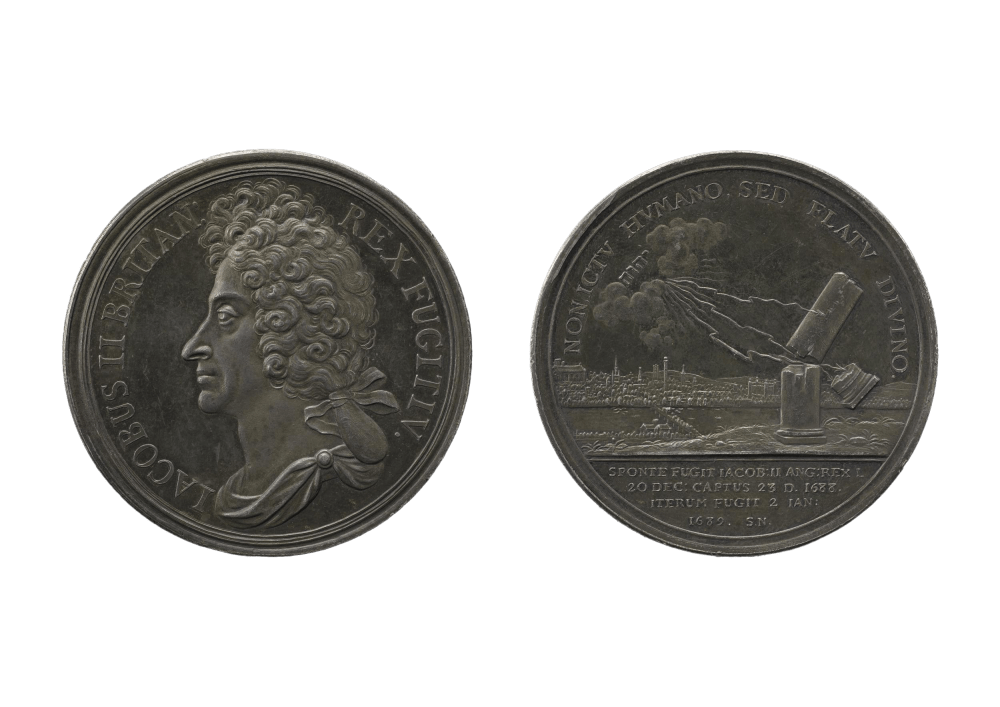
The downfall of James II was a source of ridicule, satirised in visual and material culture through the language of masculinity. One source of this satire can be found in the medallic art of the Glorious Revolution, where a mixture of Williamite propaganda and demand generated by a commercial market for satire resulted in James’s unmanly reputation being struck into the medallic record. The research in this note was kindly funded by a BNS Research Grant.

 BNS Research Blog
A quick reaction:
Back in 1899 Alexander published his “Barbara Villiers: or, A History of Monetary Crimes”. I found it a valuable book in that it highlighted a surely crucial event in the history of British and indeed world coinage: the abolition of seigniorage on gold and silver coin in 1666, (surely an odd year to chose, as the English state had so much else on its plate!).
Whilst I would not deny the role of what we today might call “tabloid journalism” in shaping history, I long felt del Mar weakened his case by the way in which he approached the Barbara Villiers aspects of the affair.
This current short piece seems to focus entirely upon the “tabloid journalistic” aspect of the Glorious Revolution. I hope we will see, in due course, the author expanding the horizons of his studies, beyond popular matters of supposed masculinity.
Rob Tye