Author: BNS Blog Coordinator
Seventeenth Century Glasshouses – Gary Oddie
One of the main features of the seventeenth century token series, apart from its size, is the diversity of issuers and the potential for even a singular token to open up a window on people, trades and places that have been lost in the intervening years. A recent talk at the British Numismatic Society (Laura Burnett – April 2023) mentioned in passing the token issued at the Glasshouse at Calne in 1669 (Wilts W/D 35). This reminded me of some research I carried out over a decade ago into this token and seventeenth century glasshouses, which is revisited in this note.
A Die Study of James I Shillings – Second Issue, mm Mullet – Gary Oddie and Michael Thompson
This note continues the die studies of James I shillings, working backwards through the mintmarks of the second issue. Here the mintmark Mullet is presented – issued 9th May 1611 to 22nd May 1612.In keeping with the £9 11s 4d of silver at the Trial of the Pyx, this issue is over average rarity and 49 specimens have been found struck from 26 obverse and 32 reverse dies. The six obverse legends include a die sinkers’ error with IACOBVS D G MAG BRIT FRA ET HIB “R” REX. A second specimen confirms that the extra “R” is not caused by double striking.
A Seventeenth Century Truck System – Thomas Renolds of Colchester (Essex W/D 143) – Gary Oddie
Truck systems are often viewed as a product of the industrial revolution, where factory owners paid their workers with tokens and tickets that could only redeemed in the factory shop. An alternative form of truck system is where the workers are paid in kind by their employers – often using the employers products. One such case occurred in the seventeenth century when Thomas Renolds of Colchester paid his piece workers in cloth, which they could only sell at a loss. The workers took Renolds to court for the lost money, which he ultimately paid. Renolds was a wealthy merchant and also issued seventeenth century tokens. A die study reveals five obverse and five reverse dies and illustrates the eight known die combinations. A further die, noted by Judson in 1987, has not yet been seen and is suspected not to exist.
The Find Spot for a Hampshire Hoard of Coins of Edward the Confessor and Harold II Untangled – Hugh Pagan
Clarification on three late Anglo-Saxon coin hoards.
Observations on Die Sets and Die Sinker Errors – Mike Shott
The last Henry VI Halfpenny of Calais? – Alan Dunlop
A Machine-Made Contemporary Counterfeit of a Scottish Charles I Turner, Made in London – Gary Oddie
This note presents a contemporary counterfeit of a Scottish twopence (turner) of Charles I. It was found on the Thames foreshore and as it has not been cut from its original copper strip, it is unlikely to have circulated due to the sharp corners. It was probably made in London using a roller press. A “large mass” of similar scissel and uncut strips of counterfeit Royal Patent farthings was found during an excavation in the well in Scarborough Castle in 1907. Though widely dispersed, several pieces from this group are also presented for comparison. In both cases, it would appear that the contemporary counterfeiters were keeping up with the latest technology being used to make the official coins and tokens.
BNS Hoards Conference, Sat. July 15th, Ashmolean Museum, Oxford – Speakers and Topics
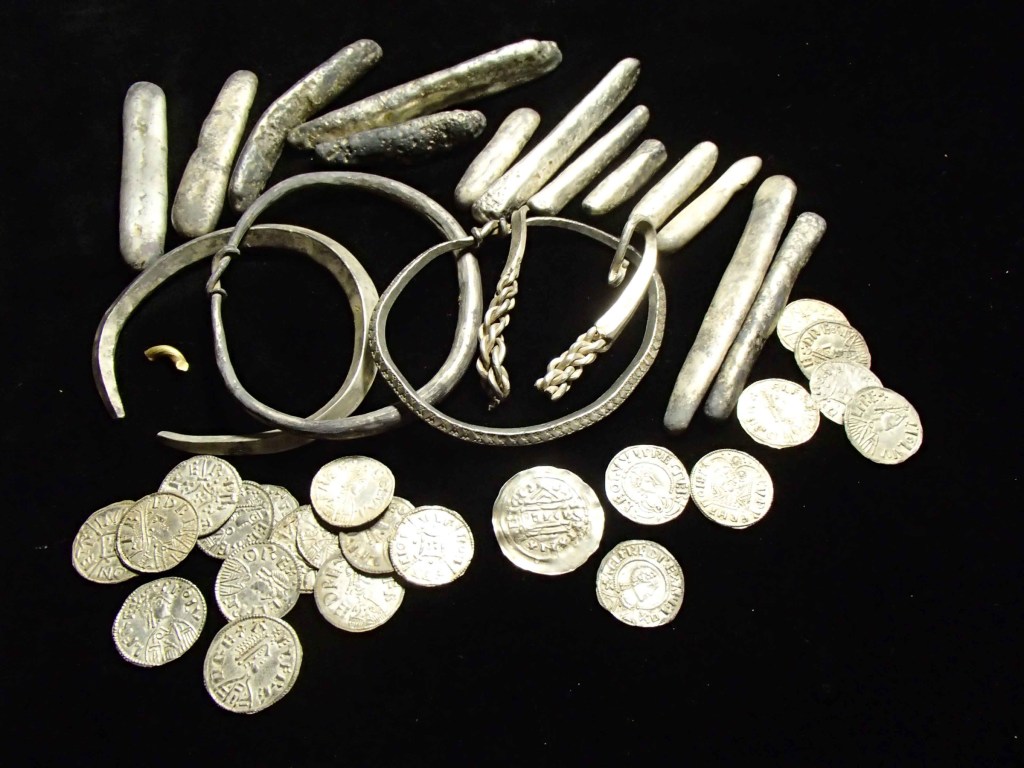
At this all-day Conference, focused on the British Isles, leading figures working on coin hoards and related material will look at recent discoveries and what we can learn from them along with the latest thinking on how coinage came to be hoarded and then hidden. It will then consider the latest techniques being used to recover and interpret hoards and to make available hoard data for researchers and collectors. Tickets still available!
The Dies and Chronology of Charles I Oxford Mint Sixpences – J. Davidson.
This note serves two purposes. Firstly, to rationalise and update the die designations of this series, and secondly to provide new insight into a possible chronology of the coins and the die usage. Updated version: February 2024
 BNS Research Blog