Author: BNS Blog Coordinator
A Machine-Made Contemporary Counterfeit of a Scottish Charles I Turner, Made in London – Gary Oddie
This note presents a contemporary counterfeit of a Scottish twopence (turner) of Charles I. It was found on the Thames foreshore and as it has not been cut from its original copper strip, it is unlikely to have circulated due to the sharp corners. It was probably made in London using a roller press. A “large mass” of similar scissel and uncut strips of counterfeit Royal Patent farthings was found during an excavation in the well in Scarborough Castle in 1907. Though widely dispersed, several pieces from this group are also presented for comparison. In both cases, it would appear that the contemporary counterfeiters were keeping up with the latest technology being used to make the official coins and tokens.
BNS Hoards Conference, Sat. July 15th, Ashmolean Museum, Oxford – Speakers and Topics
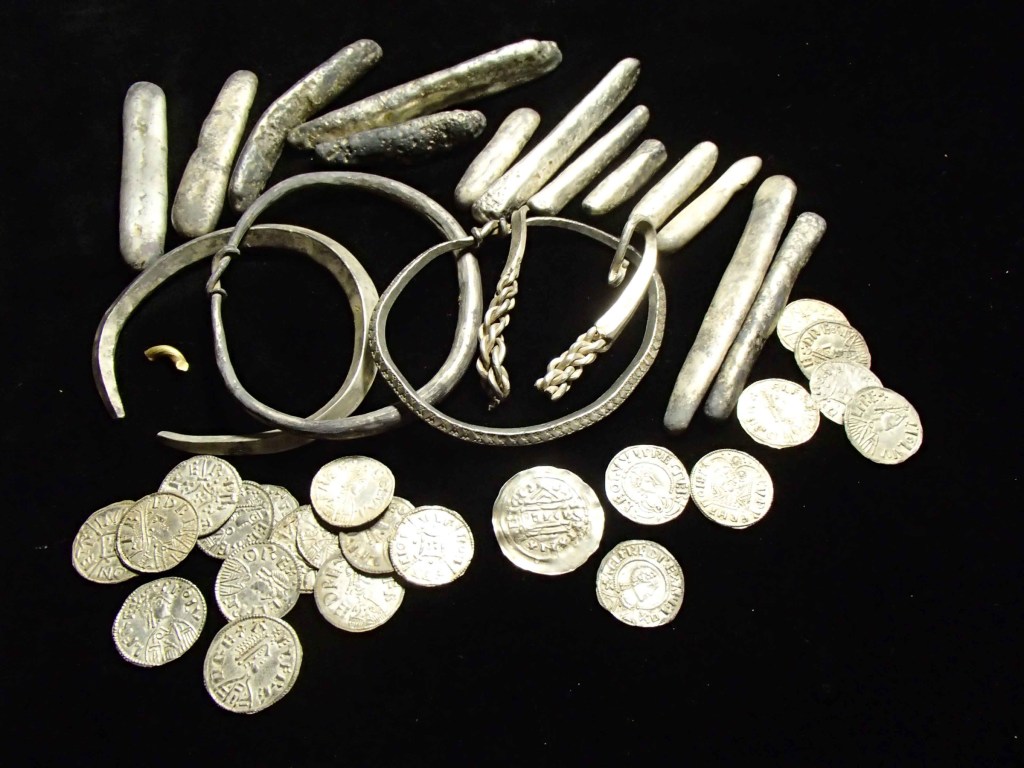
At this all-day Conference, focused on the British Isles, leading figures working on coin hoards and related material will look at recent discoveries and what we can learn from them along with the latest thinking on how coinage came to be hoarded and then hidden. It will then consider the latest techniques being used to recover and interpret hoards and to make available hoard data for researchers and collectors. Tickets still available!
The Dies and Chronology of Charles I Oxford Mint Sixpences – J. Davidson.
This note serves two purposes. Firstly, to rationalise and update the die designations of this series, and secondly to provide new insight into a possible chronology of the coins and the die usage. Updated version: February 2024
A New Type of Edward IV First Reign Canterbury Penny – Dave Greenhalgh
A Die Study of Victorian Shillings Dated 1865 : Part 3 – Contemporary Counterfeits – Gary Oddie
The majority of contemporary counterfeit silver coins of Queen Victoria are cast in white metal. The alloy means that they do not survive well, wearing badly, often losing any plating they might have had and suffering from tin pest. This note presents four counterfeit shillings of 1865 that can be distinguished by their different die numbers. Three might be classed as pewter and the fourth as a tin-lead solder. A brief survey of other known counterfeit shillings bearing die numbers (1864-1879) is likely a significant underestimation of the number of counterfeiters who were copying coins of this period, probably active over the following few decades.
A Die Study of Victorian Shillings Dated 1865… Part 2 – The Die Numbers – Gary Oddie
In a previous BNS Blog note the die numbered shillings of 1865 were used to validate the statistical methods used to predict the numbers of dies used for a coinage. The 78 different die numbers gathered there have now been supplemented to produce an almost complete set of die number images for 1865 presented here. Analysing the data for the shillings for the whole of the die number period, including Royal Mint annual reports, reveals a systematic year-on-year variation in the numbers of coins struck per die. The production data for the obverse and reverse dies track each other almost exactly over the whole period. This can only be the result of a variation in the die manufacturing process or Mint practices – “The Die Number Experiment”. The 1870 Royal Mint report cites changes in the die hardening process resulting in increased durability, the result is visible in the data. Further analysis of the data for other denominations and the
read more A Die Study of Victorian Shillings Dated 1865… Part 2 – The Die Numbers – Gary Oddie
A Die Study of James I Shillings – Second Issue, mm Tower – Gary Oddie and Michael Thompson
This note continues the die studies of James I shillings, working backwards through the mintmarks of the second issue. Here the mintmark Tower is presented – issued 22nd May 1612 to 28th April 1613. With just 21 specimens found struck from 12 obverse and 11 reverse dies, including four legend variations, the coverage is 0.71 and there are likely to be a total of around 21 obverse and 20 reverse dies.
Contemporary Counterfeit Shillings of James I, 1603-1625, Circulating to 1696-7 – Gary Oddie
This note takes a small detour from the die studies being carried out for the shillings of the various issues and mint marks of James I and looks at contemporary counterfeits of the shillings of this reign. The pieces turn out to be somewhat rarer than those of the following reign (Charles I) with images of just 30 pieces being found. This includes the 12 pieces accumulated in the Baldwins forgery cabinet accumulated over the past 140 years. A contemporary counterfeiter’s die is also presented, with images thanks to the Royal Mint Museum, along with the rediscovery of a likely later striking in lead sold in the R. Carlyon-Britton and H.M. Lingford collections in 1949 and 1951 respectively. As the James I shillings would circulate through the civil war and up to the recoinage of 1696-7, there were plenty of opportunities for counterfeiting, especially as the official hammered coinage deteriorated. A simple correlation between weight (wear) and diameter (clipping) is
 BNS Research Blog